
Why Planted?
Too many ministry leaders are actively considering a transition out of vocational ministry roles... roughly 24% to be precise. That number is staggering, and we want to do something about it.
There are two likely categories of ministry leaders looking for a way out: 1) those who entered ministry roles without actually confirming their calling, and 2) those who were underprepared and unsupported for the intense, unique pressures of church leadership. Planted is designed to address both issues.
We intentionally explore ministry calling with each apprentice and resident, seeking clarity and conviction to ensure that the leaders we launch into ministry have verified that this is their life's calling. Success sometimes looks like honestly identifying that vocational ministry is not the right fit for an individual and helping them confidently explore other avenues for faithful impact.
We also focus on developing the whole leader through dedicated ministry mentorship, robust theological training, and intentional peer-to-peer discipleship. This process builds spiritual resilience and cultivates the healthy habits that will prepare leaders for a lifelong, sustainable ministry focused on discipleship.
Inspired by Jeremiah 17:7-8, Planted's core mission is to help ministry leaders put down deep, sustaining roots of faith that will anchor them through the inevitable difficult seasons of ministry. While challenging seasons are a certainty, we don't just hope you survive; we equip you to weather hard times with integrity and conviction, persevering in faithful ministry that reliably produces fruit.
There are two likely categories of ministry leaders looking for a way out: 1) those who entered ministry roles without actually confirming their calling, and 2) those who were underprepared and unsupported for the intense, unique pressures of church leadership. Planted is designed to address both issues.
We intentionally explore ministry calling with each apprentice and resident, seeking clarity and conviction to ensure that the leaders we launch into ministry have verified that this is their life's calling. Success sometimes looks like honestly identifying that vocational ministry is not the right fit for an individual and helping them confidently explore other avenues for faithful impact.
We also focus on developing the whole leader through dedicated ministry mentorship, robust theological training, and intentional peer-to-peer discipleship. This process builds spiritual resilience and cultivates the healthy habits that will prepare leaders for a lifelong, sustainable ministry focused on discipleship.
Inspired by Jeremiah 17:7-8, Planted's core mission is to help ministry leaders put down deep, sustaining roots of faith that will anchor them through the inevitable difficult seasons of ministry. While challenging seasons are a certainty, we don't just hope you survive; we equip you to weather hard times with integrity and conviction, persevering in faithful ministry that reliably produces fruit.

Mission
vision
Planted extends the mission of Christian Fellowship Church, to glorify God by making disciples of all people, by intentionally investing in the next generation of leadership, equipping and sending out men and women who will faithfully advance the gospel through high-impact, disciple-making ministry within the local church and beyond.
Planted seeks to shape the next generation of church leaders: men and women equipped with the clarity of calling, spiritual resilience, and high-impact skills required for lifelong ministry in the church.
Model

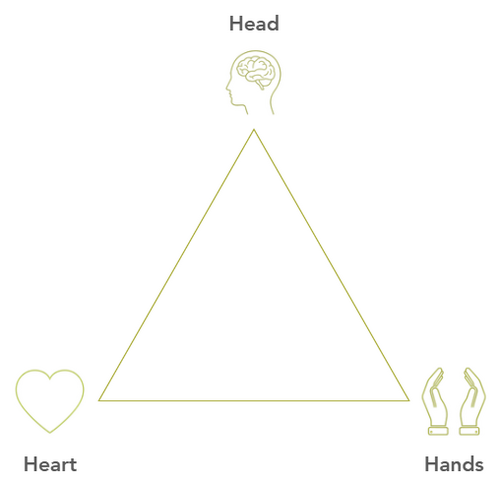
Planted is designed around a three-part model of discipleship, incorporating Head, Heart, and Hands. All three are necessary elements to the growth and health of a disciple. To develop into a healthy disciple, we ought to be growing in our knowledge of God and his word, our love for God and his world, and our capacity to use our gifts and abilities to partner with God in his mission.
By seeking a balanced approach, we are able to focus on a holistic discipleship, forming the whole person as a disciple of Jesus, seeking to model ourselves after Jesus, who exhibited all three aspects, and who challenged his disciples to think, love, and do as they modeled themselves after him. All of this, of course, is done in a spirit of humility, realizing that we will fail to live up to the ideal set for us by Jesus.
The “head” component of discipleship is addressed through the ongoing education component of the apprenticeship and residency programs. In a cohort discussion model, our apprentices and residents will be challenged to think well about God, his word, his world, and his people.
The “heart” component is accomplished through guided personal devotion time, as well as intentional peer-to peer discipleship. Each apprentice or resident will follow a one-year devotional plan that will include a Bible-in-a-year reading plan, as well as devotional thoughts on God’s word. Apprentices and Residents will meet in discipleship pairs to discuss what they have been learning in the cohort discussions and their devotional time, and for confession of sin and accountability.
Finally, the “hands” component of discipleship will happen in the work that each apprentice and resident does with their ministry mentors, serving in their specific ministries. This will happen through the practice of serving, as well as through regular and intentional mentoring, utilizing the model of Mentored Practice to ensure that they prepared with the knowledge and skills necessary to thrive in their ministry role.
By seeking a balanced approach, we are able to focus on a holistic discipleship, forming the whole person as a disciple of Jesus, seeking to model ourselves after Jesus, who exhibited all three aspects, and who challenged his disciples to think, love, and do as they modeled themselves after him. All of this, of course, is done in a spirit of humility, realizing that we will fail to live up to the ideal set for us by Jesus.
The “head” component of discipleship is addressed through the ongoing education component of the apprenticeship and residency programs. In a cohort discussion model, our apprentices and residents will be challenged to think well about God, his word, his world, and his people.
The “heart” component is accomplished through guided personal devotion time, as well as intentional peer-to peer discipleship. Each apprentice or resident will follow a one-year devotional plan that will include a Bible-in-a-year reading plan, as well as devotional thoughts on God’s word. Apprentices and Residents will meet in discipleship pairs to discuss what they have been learning in the cohort discussions and their devotional time, and for confession of sin and accountability.
Finally, the “hands” component of discipleship will happen in the work that each apprentice and resident does with their ministry mentors, serving in their specific ministries. This will happen through the practice of serving, as well as through regular and intentional mentoring, utilizing the model of Mentored Practice to ensure that they prepared with the knowledge and skills necessary to thrive in their ministry role.

Planted is designed around a three-part model of discipleship, incorporating Head, Heart, and Hands. All three are necessary elements to the growth and health of a disciple. To develop into a healthy disciple, we ought to be growing in our knowledge of God and his word, our love for God and his world, and our capacity to use our gifts and abilities to partner with God in his mission.
By seeking a balanced approach, we are able to focus on a holistic discipleship, forming the whole person as a disciple of Jesus, seeking to model ourselves after Jesus, who exhibited all three aspects, and who challenged his disciples to think, love, and do as they modeled themselves after him. All of this, of course, is done in a spirit of humility, realizing that we will fail to live up to the ideal set for us by Jesus.
The “head” component of discipleship is addressed through the ongoing education component of the apprenticeship and residency programs. In a cohort discussion model, our apprentices and residents will be challenged to think well about God, his word, his world, and his people.
The “heart” component is accomplished through guided personal devotion time, as well as intentional peer-to peer discipleship. Each apprentice or resident will follow a one-year devotional plan that will include a Bible-in-a-year reading plan, as well as devotional thoughts on God’s word. Apprentices and Residents will meet in discipleship pairs to discuss what they have been learning in the cohort discussions and their devotional time, and for confession of sin and accountability.
Finally, the “hands” component of discipleship will happen in the work that each apprentice and resident does with their ministry mentors, serving in their specific ministries. This will happen through the practice of serving, as well as through regular and intentional mentoring, utilizing the model of Mentored Practice to ensure that they prepared with the knowledge and skills necessary to thrive in their ministry role.
By seeking a balanced approach, we are able to focus on a holistic discipleship, forming the whole person as a disciple of Jesus, seeking to model ourselves after Jesus, who exhibited all three aspects, and who challenged his disciples to think, love, and do as they modeled themselves after him. All of this, of course, is done in a spirit of humility, realizing that we will fail to live up to the ideal set for us by Jesus.
The “head” component of discipleship is addressed through the ongoing education component of the apprenticeship and residency programs. In a cohort discussion model, our apprentices and residents will be challenged to think well about God, his word, his world, and his people.
The “heart” component is accomplished through guided personal devotion time, as well as intentional peer-to peer discipleship. Each apprentice or resident will follow a one-year devotional plan that will include a Bible-in-a-year reading plan, as well as devotional thoughts on God’s word. Apprentices and Residents will meet in discipleship pairs to discuss what they have been learning in the cohort discussions and their devotional time, and for confession of sin and accountability.
Finally, the “hands” component of discipleship will happen in the work that each apprentice and resident does with their ministry mentors, serving in their specific ministries. This will happen through the practice of serving, as well as through regular and intentional mentoring, utilizing the model of Mentored Practice to ensure that they prepared with the knowledge and skills necessary to thrive in their ministry role.
